
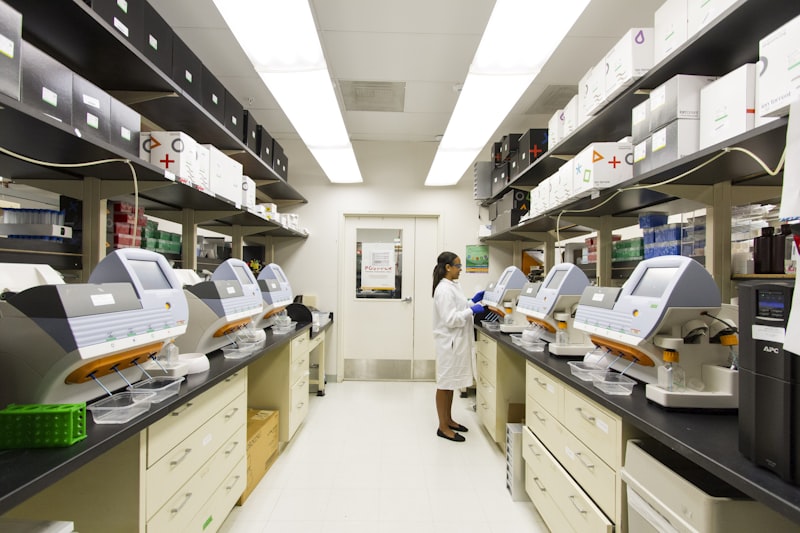
As patient volumes and diagnostic demands expand across district and regional healthcare facilities, transitioning from manual microscopy and bench chemistry to automated diagnostic analyzers is essential for throughput, turnaround time, and diagnostic accuracy.
1. 3-Part vs. 5-Part Differential Hematology Systems
Selecting the appropriate hematology platform depends on facility clinical scope:
- 3-Part Differential Analyzers: Measure Granulocytes, Lymphocytes, and Mid-cells (Monocytes/Eosinophils/Basophils). Cost-effective, compact, and ideal for health centers and general outpatient clinics requiring up to 60 samples/hour.
- 5-Part Differential Analyzers: Utilize flow cytometry and laser light scatter to independently differentiate Neutrophils, Lymphocytes, Monocytes, Eosinophils, and Basophils. Critical for regional referral hospitals managing complex infectious diseases, oncology, and hematological disorders.
2. Facility Infrastructure Pre-Requisites
Before commissioning automated analyzers, biomedical engineers must verify:
- Stable Power & Online UPS: Pure sine-wave online uninterruptible power supply (UPS) systems to shield delicate optical sensors from regional voltage spikes.
- Water Quality: High-throughput clinical chemistry analyzers require dedicated Type II deionized water systems (<1.0 μS/cm conductivity) for cuvette washing.
- Reagent Compatibility & Open vs. Closed Systems: Evaluate total cost of ownership, factoring in diluent, lyse, and cleaner consumption rates against closed barcode-locked systems.
Nebrix Limited provides turnkey clinical laboratory equipment solutions including installation, biomedical calibration, operator certification, and scheduled preventative maintenance across Tanzania.